- The Weekly From ParentsCanada
- Posts
- The Real Unsung Heroes of HEATED RIVALRY: Parents Who Didn't Ruin It
The Real Unsung Heroes of HEATED RIVALRY: Parents Who Didn't Ruin It
Click for THE FULL STORY.

Parents Canada
January 22, 2026

THE FULL STORY
The first season of this steamy hockey romance on Crave has captured the zeitgeist—but it’s the thoughtful, imperfect and quietly supportive parents who helped make Heated Rivalry land with joy instead of heartbreak. (Plus, how cool that it’s so Canadian!)
By KATIE DUPUIS, Editor, ParentsCanada
You might think it’s funny to see the series name Heated Rivalry pop up in your inbox from a parenting magazine. I can see why. It’s a pretty sexy show—NSFW and definitely not something you’d have on with young kids around. But I’ve been thinking about this show, and this article, for weeks now and when I get stuck on an idea, I have to see it through.
I was one of those people who devoured the series when it came out. I was up at the crack of dawn on Boxing Day to watch the season finale. I’ve probably watched the whole thing start to finish another four or five times (rewatching is hilariously referred to by the internet as “Reheated Rivalry”), and I’ve seen episode six so many times I’ve lost track. My Instagram FYP is basically wall-to-wall edits and interviews with the stars, Connor Storrie and Hudson Williams. If you’ve talked to me in the past month, I’ve almost certainly brought it up—and I’ve successfully converted more than one friend along the way.
Basically, I haven’t fan-girled this hard since Dawson’s Creek in high school. And honestly? I can’t even fully explain why.
Why I Fell All the Way In—Maybe
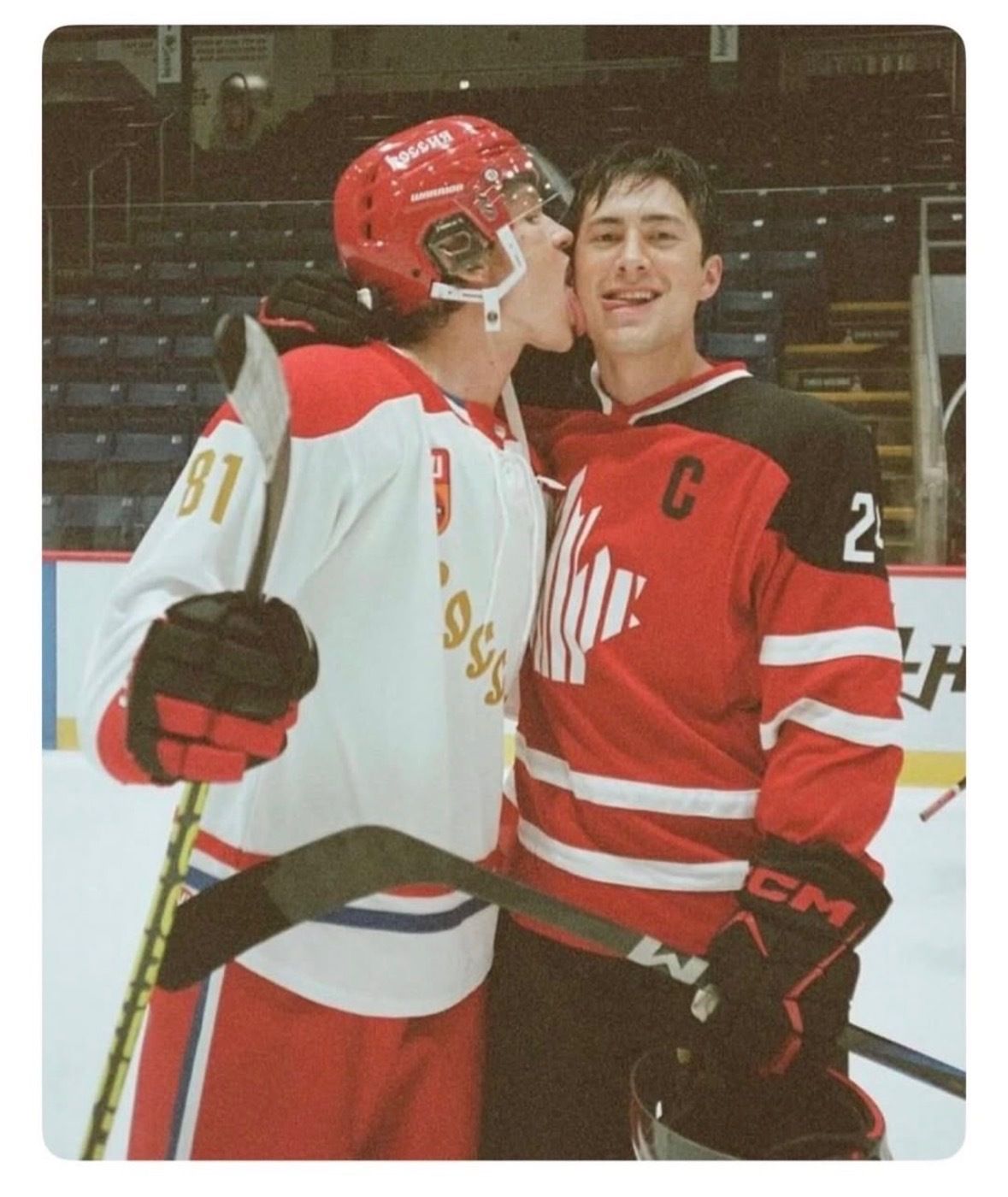
I’ve thought about it a lot. Some of it is the acting—Storrie learned Russian in just a few weeks for the role, for goodness’ sake—and the remarkable chemistry between the two leads. Some of it is the structure of the story itself: There are two love stories unfolding at once, each grounded in longing, restraint and eventual relief. Some of it is personal—many of the hockey scenes were filmed at the arena I practically grew up in, in Guelph, Ont. It’s not one thing, but an amalgam of many parts. And clearly, I’m not alone. Heated Rivalry has more or less taken over the zeitgeist.
But there’s one element I’ve been turning over in my head that hasn’t received nearly as much attention as it deserves. I’ve seen a few memes about it, sure, but not much deeper analysis. And that’s the parents.
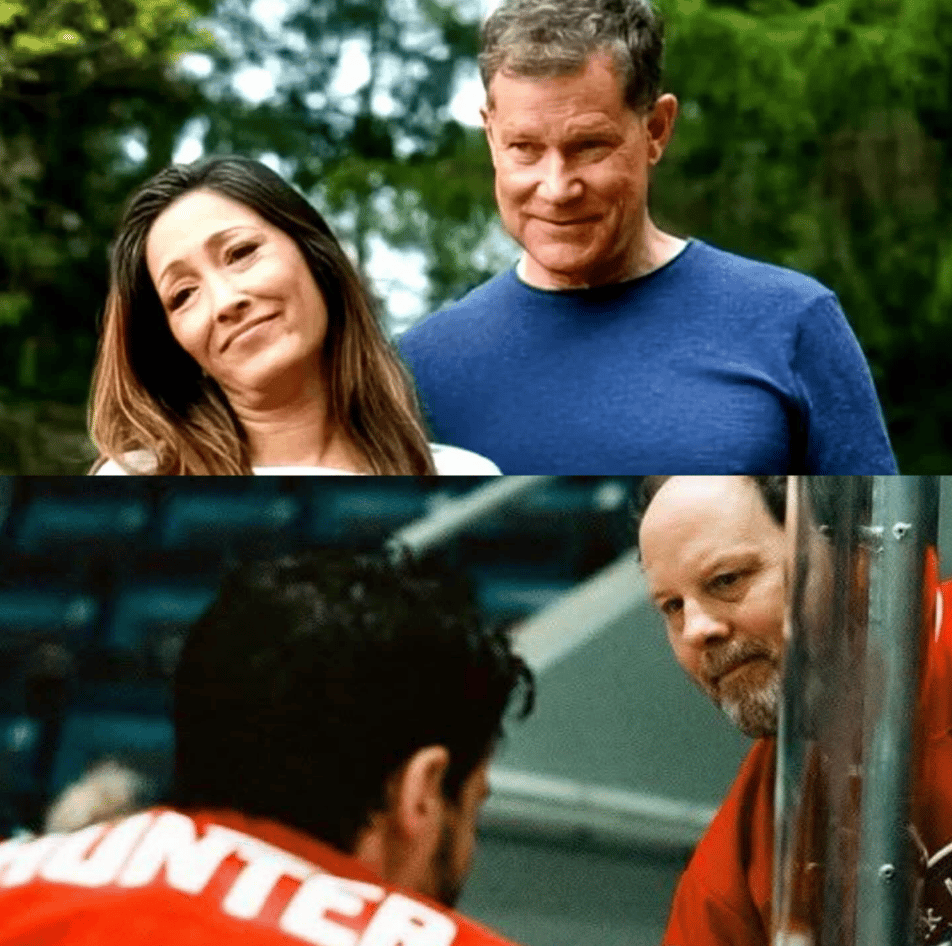
More specifically, how the support of Kip’s dad and the reaction—and eventual support—of Shane’s parents fundamentally shaped the story. How those choices allowed the season to land with tenderness and joy, rather than veering into a darker, more familiar narrative.
That said, I’m not a member of the queer community, so as an ally, I wanted to make sure I wasn’t projecting meaning where it didn’t belong. With that in mind, I reached out to Nicole Elkington, a research coordinator at the Centre for Addiction and Mental Health working in the 2SLGBTQ+ Youth Health and Homelessness Research Lab, to talk through why these characters and their scenes mattered—and why they resonated so deeply.
The Parents as Secondary Characters—and Why That Matters
One of the first things Elkington said when I raised the topic of the parents was that she and her coworkers had been talking about the show nonstop, too. And that what stood out to her about the parental figures was how intentionally they were written.
To Elkington, Kip’s dad and Shane’s parents weren’t just background characters used to advance the plot. They were fully formed, emotionally grounded presences and that mattered.
“We’re used to seeing queer storylines hinge on rejection, anger or silence from parents. Those narratives are rooted in lived reality and for many people, they’re painfully accurate,” says Elkington. “But they’re not the only reality. And when media repeatedly centres only the worst-case outcomes, it quietly teaches viewers what they should expect if or when they come out themselves.”
Waiting for the Other Shoe to Drop
That expectation showed up again and again as Elkington and I talked through specific scenes.
When Kip and Scott Hunter kiss on the ice after the Admirals’ Stanley Cup win, both of us admitted we braced ourselves. The camera cuts to Shane and his parents watching at home. The moment hangs. And for a split second, it feels like something bad is about to happen.
“I had this horrible feeling that it was going to take a nosedive,” Elkington said. Her sister felt it when she was watching, too. It seemed like everyone was holding their collective breath, waiting for Shane’s mom or dad to make a homophobic comment, shoot a look of disgust or convey some other sign that joy was about to be pulled away.
Instead, it never comes.
By choosing not to make that moment traumatic, the show did something quietly radical: It allowed the story to keep moving forward without stepping into familiar, negative territory.
Imperfect Parents, Honest Conversations
What makes the parents in Heated Rivalry feel especially believable isn’t that they say all the right things. It’s that they don’t.
Shane’s mother, Yuna, hesitates. She asks awkward questions. She leaves the table. She says she needs a drink. There’s a moment where she even frames her son’s sexuality through the lens of strategy and branding—something Elkington admitted she didn’t love, but still found true to the character.
“They did a great job of keeping the characters imperfect,” she said. “It felt very realistic—how a conversation can be navigated while still maintaining who you are and the relationship you have with your kid.”
That imperfection is the point. The show resists the urge to turn these moments into speeches or teachable monologues. Instead, it lets them unfold the way real conversations do, with pauses, missteps and emotional recalibration.
“You don’t have to have it down perfectly,” Elkington said. “It doesn’t need to be scripted.”
“I Want You to Know That I Really Tried”
The dock scene between Shane and his mother hit both of us hardest.
Shane apologizes. He explains that he tried not to be gay. He braces for disappointment that doesn’t materialize. As a parent myself, I felt my chest tighten watching it. The idea that a child could believe, even for a second, that being who they are might let you down is devastating.
Elkington felt it too.
“That moment really landed for me,” she said. “The kid thinks you’re going to be disappointed and you need them to understand that you’re not. Not by any part of who they truly are.”
It’s a subtle shift in perspective, but a powerful one. The focus isn’t on parental approval as the ultimate outcome. It’s on parental responsibility—the responsibility to communicate unconditional safety and security. (Louder for the people in the back!)
Love Without a Lecture
Maybe part of what has made Heated Rivalry such a phenomenon is that, while the political realities of the hockey world are always present, they aren’t the only thing shaping Shane and Ilya’s relationship.
Yes, there’s a consistent tension between what the couple is exploring and navigating privately and what they can safely live out publicly. Even after coming out to Shane’s parents, Shane and Ilya are still navigating the very real constraints of professional hockey (something they’ve been figuring out for ten years by the time the season comes to a close). To that end, the political context doesn’t disappear, but it also doesn’t eclipse the relationship itself.
This is year another reason the parental response is so effective, Elkington noted, because they ultimately take a step back. When Shane’s mom starts to dive in on how to capitalize on the moment and Shane starts to panic, it appears she pulls back (we’ll find out more in season two, no doubt, but for now, there is a respect for Shane and Ilya’s experience and wishes for moving forward).
That respect is powerful.
Ultimately, Elkington said, that’s what most queer people want when they come out—not a perfectly worded response or a grand gesture, but affirmation, respect and the freedom to navigate their lives on their own terms.
Why This Ending Was Possible
Had the parents reacted differently—with anger, rejection or shame—the series would have become something else entirely. Heavier. Harder. More familiar.
Instead, Heated Rivalry chose a different path. One where parents are allowed to be surprised but not cruel. Confused but not dismissive. Imperfect but present.
That choice doesn’t erase the reality that coming out is still complicated, ongoing and deeply personal. Those conversations don’t stop after one scene or one brave admission. But it does allow the story to end where it does—with love intact, futures open and characters who don’t have to earn acceptance by suffering first.
So, maybe that’s why so many of us keep rewatching it.
Read more articles online at
parentscanada.com